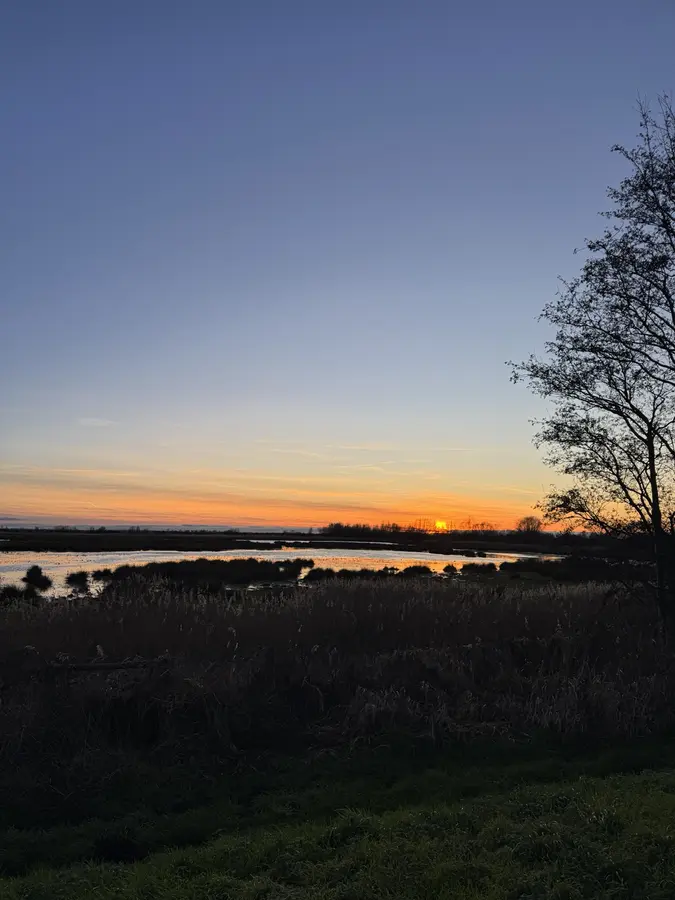
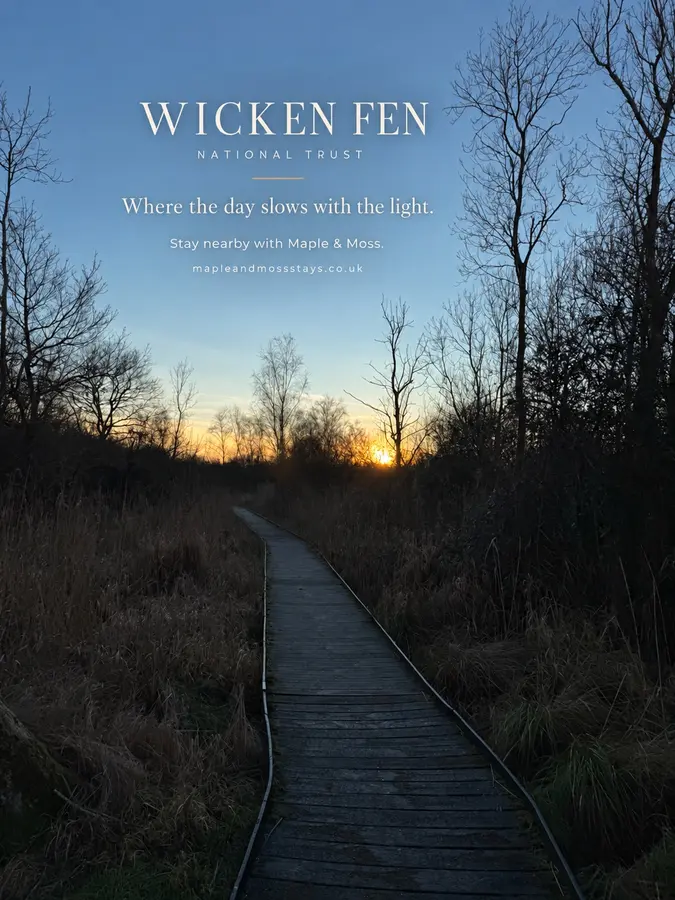
Nine miles or so south of Ely, the city’s streets give way to a horizon drawn in reedbeds, water and immense Fenland sky. Wicken Fen National Nature Reserve feels both elemental and intricately alive. It protects a rare remnant of the historic fen landscape — one of Europe’s important wetlands — and is managed by the National Trust. Come for spectacle and you may miss its real character; come prepared to look and listen, and the quiet begins to reveal itself.
The reserve changes continually with the season and the weather. Reeds take the wind in silvery waves. Sedges gather at the margins. Dragonflies and damselflies can flash over the water in warmer months, while butterflies move through flowering edges. Wetland birds call from cover and, with patience, a deer may appear at a distance. None of these encounters is certain. That uncertainty is part of the pleasure.
Spring brings fresh green growth and an increasingly busy soundscape; high summer lends warmth and movement to the waterways. In autumn the vegetation deepens to tawny gold, while winter pares the fen back to its essential geometry. Each season offers a different kind of attention. On bright days, shade is limited on the wider paths; after rain, conditions beyond the boardwalk may be softer underfoot. A forecast checked before breakfast is more useful than an overfilled itinerary.
Begin with the boardwalk
The accessible Boardwalk and Woodland Walk make an easy, absorbing introduction to the historic Sedge Fen. Raised above the wet ground, the boardwalk threads through vegetation that once shaped local working life. Pause at the wildlife hides, read the signs, and allow the landscape to come into focus rather than hurrying towards a viewpoint.
Smock Mill and Fen Cottage add a human scale to the scene when they are open or visible as part of your visit, recalling the ingenuity required to live and work in this watery country. The seasonal Summer Nature Trail reaches farther into the fen when conditions and conservation work allow. Routes and access can change, so it is worth checking what is available on the day.
Beyond the historic core, Adventurers’ Fen and the wider reserve open into a more expansive landscape. Konik ponies and Highland cattle graze parts of this area as conservation animals, helping create a varied habitat. They are not a guaranteed sight and should always be given space. For families, the mixture of boardwalk, hides and close-up nature offers plenty to notice without turning the day into a checklist.
Water, wheels and a slower view
Seasonal boat trips offer a beautifully unhurried perspective, slipping along the waterways at the pace of the fen itself. Cycle hire may also be available, making it possible to explore farther along the wider paths. Both operate seasonally and arrangements can change, so reserve ahead or confirm availability before setting out.
Photographers will find the reserve more rewarding when they work with its restraint. A long lens helps in the hides, but there is equal pleasure in the graphic lines of sedge, the texture of water and the scale of a small figure beneath an enormous sky. Binoculars are useful for wildlife watching; calm weather can make movement and birdsong easier to detect.
If you are visiting with children, let the hides set the rhythm. A few quiet minutes spent listening, sketching or counting colours in the reeds can be more engaging than a long route completed at speed. Keep little hands and voices considerate around other watchers, and leave plants, feathers and other natural finds where they belong.
What visitors notice
Recurring themes in visitor experiences are the reserve’s peaceful atmosphere and the ease of the boardwalk. People often value the informative signs and hides, the tranquillity of a boat trip, and the chance of a wildlife encounter. Families appreciate having nature within reach; cyclists enjoy the connection to the wider landscape; and a café stop gives the outing a natural pause.
Experiences do vary. Wildlife responds to season, time of day and conditions, and a busy afternoon feels different from a still morning. Bringing binoculars, moving softly and choosing calmer weather can improve the chance of seeing more, but there is no poor visit if the measure is simply time spent outdoors.
A local way to experience it
Allow a slow half-day rather than trying to cover everything. Begin with coffee, then take the boardwalk at an easy pace. Settle into one wildlife hide long enough for the first rustles and calls to become distinct. Afterwards, choose a wider path or a seasonal activity, leaving space at the end of the visit for the light to soften across the landscape.
Confident cyclists can arrive from Ely via the 8.2-mile National Cycle Network route from Ely to Wicken Fen. It is a satisfying transition from city to open fen, but the old A142 crossing requires particular care: check the current route guidance, assess conditions and only cross when it is safe. Riders should carry water, lights, a repair kit and clothing for exposed weather.